
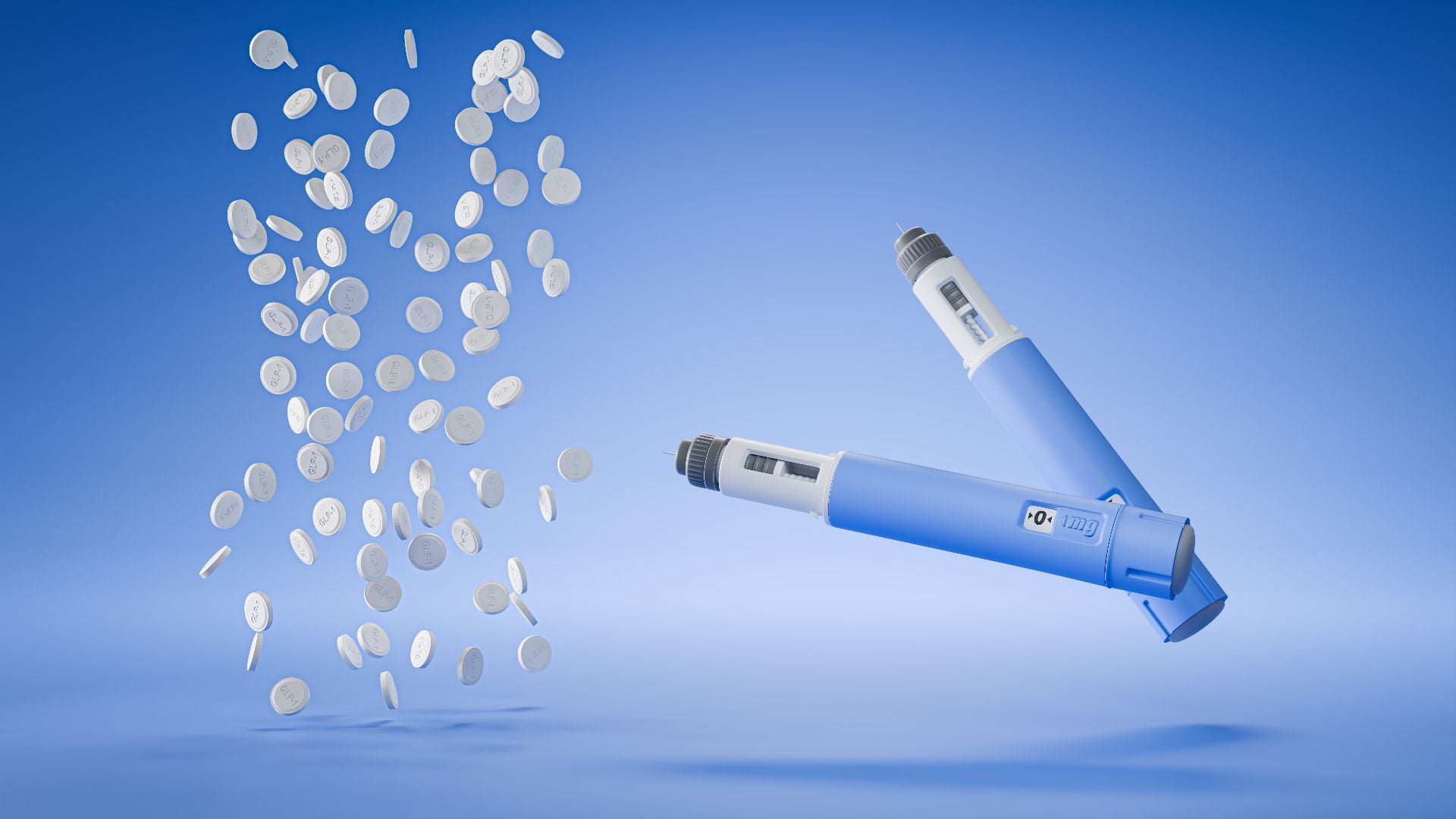
Weight loss drugs are everywhere, and you’ve probably seen commercials or heard people say things like GLP-1, GIP, or peptide therapy. You may be slightly familiar with these terms or not at all, but ultimately, the weight loss drugs everyone is talking about are peptides.
If the word peptides sounds familiar, you may be remembering a bit of your high school biology or chemistry class, and you wouldn’t be too far off. Our bodies naturally produce peptides, and they regulate a number of bodily functions — including how we gain or lose weight.
What Are Peptides?
Peptides are short chains of amino acid molecules your body naturally produces, and they perform important tasks throughout your body.
For example, your pancreas produces insulin, a peptide that helps your cells absorb glucose from your bloodstream, keeping your blood sugar in a safe range and storing that glucose as energy. People with type 1 diabetes can’t produce insulin, so they inject a synthetic version that mimics the naturally occurring insulin most people have.
How Do Peptides Help With Weight Loss?
Your body also produces several peptides that influence your appetite, blood sugar levels, and how quickly you digest food.
The first one is glucagon-like peptide, AKA GLP-1. It helps our bodies regulate our appetite by making us feel full, reducing cravings, and stabilizing our blood sugar levels after we eat. Other peptides that influence our eating habits and weight are glucose-dependent insulinotropic polypeptides (GIP) and glucagon. Without getting too deep into the science, GIP tells your pancreas to release more insulin and helps you break down fat for energy, while glucagon keeps your blood sugar levels from getting too low, helping control sugar cravings and maintaining your energy levels.
Like insulin, there are synthetic versions of these peptides. And, like insulin, many of these medications were originally developed to help people with diabetes. However, they also help many people lose weight. While more studies are necessary, these peptide therapies may herald a new era of weight loss and weight management.
Side Effects of Peptides for Weight Loss
Like any medication, peptides for weight loss have side effects. Some of the more common ones are:
- Nausea and vomiting
- Diarrhea
- Constipation
- Stomach pain
- Bloating
- Indigestion
- Heartburn
- Headache
- Dizziness
- Fatigue
These side effects generally fade after a few weeks as your body adjusts to the increase of peptides in your body. However, if you increase your dose, those side effects may return for several days or even weeks.
More severe side effects should be reported to your provider immediately and include:
- Sharp stomach pain
- Severe vomiting that leads to dehydration
- Jaundice (your skin or eyes look yellow)
- Allergic reaction
- Low blood sugar (hypoglycemia)
Which Peptides Are Best for Weight Loss?
The best peptide for weight loss is the one that helps you achieve and maintain your goal weight. However, not all medications work the same way because they mimic different peptides. You may need to try a few before finding the one that works for you.
Semaglutide
Semaglutide, which goes under the brand names Ozempic and Wegovy, is FDA-approved for weight loss. Rybelsus is also a semaglutide, but it is not FDA-approved for weight loss. It’s only approved for use in type 2 diabetics to help control their blood sugar levels.
Semaglutide is available in injectable and pill form and can help you lose weight by:
- Regulating your appetite by activating GLP-1 receptor agonists in your brain to help you feel less hungry
- Slowing down the digestion process so you stay fuller longer
- Increasing how much body fat you burn when you need more energy
- Stimulating insulin secretion when your blood sugar is high and suppressing the release of your stored glucose, helping you avoid sugar crashes
Tirzepatide
The only brand-name of tirzepatide that’s FDA-approved for weight loss is Zepbound. Mounjaro is also a tirzepatide product, but it’s only approved for type 2 diabetics.
Like semaglutide, tirzepatide is an injectable that mimics your natural GLP-1 peptides, slowing your digestion and stimulating insulin secretion when you need it. But unlike semaglutide, tirzepatide is dual-action, in that it also targets GIP.
In practical terms, this means that tirzepatide is not much different from semaglutide. It also regulates your appetite, slows your digestion, and helps stimulate insulin secretion while releasing glucagon to prevent a sugar crash. However, because tirzepatide also targets GIP, it does a better job helping people metabolize fat, so people tend to lose more weight than those who use semaglutide.
Liraglutide
Sazenda is the only FDA-approved liraglutide for weight loss. Victoza is another liraglutide, but it’s only for type 2 diabetics. Like semaglutide, liraglutide is an injectable GLP-1 peptide that slows your digestion, helps you feel fuller longer, and regulates your blood sugar. However, it requires a daily injection.
Other Peptides That May Help With Weight Loss
While only a few peptides have been approved for weight loss, many other peptides are being studied for their potential ability to help people manage their weight.
Retatrutide
Retatrutide is one of the most promising peptides for weight loss. It’s known as a triple agonist, meaning it targets all three receptors: GLP-1, GIP, and glucagon.
It’s similar to GLP-1 and GIP in that it slows digestion and regulates insulin. However, it also gives your glucagon a boost, speeding up your metabolism and more efficiently breaking down your fat cells for energy.
Currently in phase II trials, one study found that people lost as much as 24% of their body weight after 48 weeks on retatrutide.
Survodutide
Survodutide is an injectable dual agonist peptide that targets GLP-1 and glucagon receptors. Participants in a phase III trial lost approximately 16.6% of their body weight after 76 weeks.
What makes Survodutide different from other peptides for weight loss is that it seems to target fat and may help reduce visceral fat (fat that’s stored around your internal organs) throughout your body.
CJC-1295 and Ipamorelin
A synthetic peptide, CJC-1295 increases your body’s natural growth hormone (GH) production and insulin-like growth factor (IGF-1). It’s often paired with Ipamorelin, which creates a strong, natural surge of GH without increasing cortisol or hunger.
Working together, this combo helps you more efficiently break down stored fat and preserve muscle mass.
Sermorelin
Sermorelin is a peptide that stimulates the pituitary gland to produce more human growth hormone (HGH), which targets belly fat. It increases your resting metabolic rate so you burn more calories and may help you build more lean muscle.
How Do I Know if Peptides for Weight Loss Are Right for Me?
Peptides for weight loss aren’t for everybody, but they might be right for you if you:
- Are struggling with stubborn belly fat that won’t budge despite changes to your diet and exercise
- Think your metabolism has slowed down
- Lost weight on your own but have plateaued and can’t seem to lose anymore
- Tried losing weight with diet and exercise but it keeps coming back
Find Optimal Health
To make the most of any weight loss plan, include a healthy diet and regular exercise — even when you’re using peptide therapy as part of your weight loss or weight management goals. It ensures you keep your lean muscle mass and fuels your body the way it needs while you lose weight.
Complete Wellness and Aesthetics has been on the leading edge of peptide therapy for weight loss for over 30 years. We’ve tested our therapies on ourselves and source our peptides carefully. Schedule a free consultation to learn more about our services and how we can help you achieve optimal health.